Reactive churn management is a euphemism for losing customers slowly.
A global FMCG beverages player was watching high-value customers disappear without warning - we built the model that flagged them a month before they left.
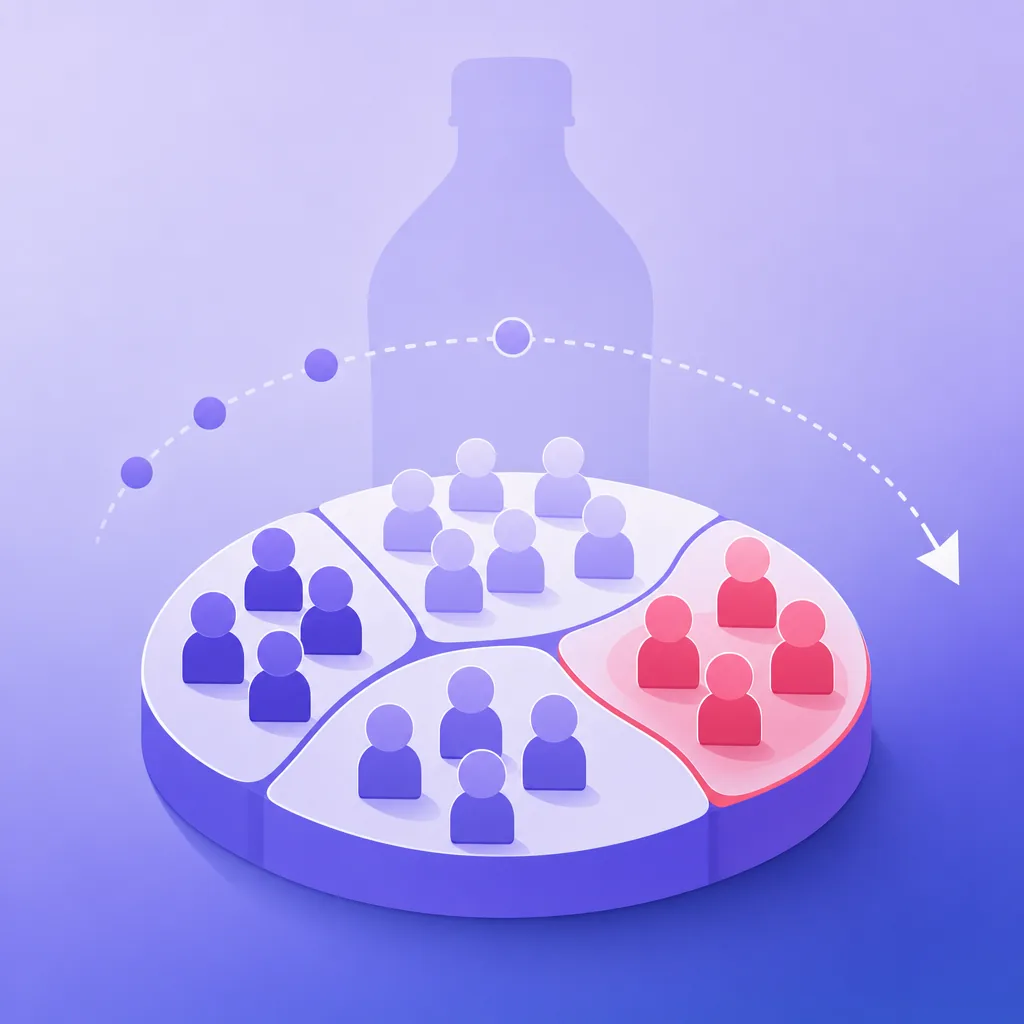
The player had a high-value customer base in a regional GCC market, and a churn problem it could only see in the rearview mirror. Behavioral signals were happening in real time - unsuccessful contact calls, lengthening intervals between orders, rising complaints - but none of them were being combined into a forward-looking risk score. Retention teams were reactive by structure: by the time a churn pattern was visible, the customer was already gone. Worse, the highest-value profiles - long contracts, premium SKUs - were the ones whose loss was most consequential and most preventable. The question: could we predict churn early enough to intervene, and tightly enough to focus retention spend where it mattered?
- 01
Frame churn before modeling it.
We defined churn operationally - zero deliveries over a two-month window - and labeled two years of historical data on a five-figure customer base against that definition. The judgment call: precise framing of the target variable is more important than model sophistication. A vague target produces a confident model that's wrong in expensive ways.
- 02
Engineer features that capture behavior, not just demographics.
We derived lagged behavioral features - average spend, delivery frequency, complaint patterns, contact-success rates, days since last purchase, longest inactivity windows. Then layered socio-economic enrichment: household composition, social class indicators, nationality. Behavior plus context - neither one alone tells the full story.
- 03
Optimize for the right error.
We trained a tree-based model and tuned it for recall. In retention, the cost of missing a churner is higher than the cost of flagging a false positive - a misfiring outreach is cheap; a missed save is not. We held precision at a defensible level and pushed recall to the wall.
The model predicted churn one month ahead with 100% recall at 44% precision - exactly the trade-off the use case demands. Retention teams shifted from reactive to proactive, focusing on high-value inactive profiles that historically generated long contracts and high spend. CRM targeting sharpened: discounts, support escalations, and outreach concentrated on the customers actually at risk. The segmentation logic itself absorbed the model's top drivers, becoming smarter than the manual rules it replaced. The unlock: a unified pipeline running from segmentation to risk score to operational action.
“In retention modeling, the metric you optimize is the metric that defines your strategy. Optimize for recall when the cost of missing matters more than the cost of a false alarm - and the rest of the system aligns to it.
Watching high-value customers churn out of a CRM that didn't see it coming? We help commercial and CRM teams turn retrospective dashboards into forward-looking risk pipelines.
Let's talk