A credit proposal is twelve documents masquerading as one.
A global tier-1 corporate & investment bank wanted its analysts to spend time on judgment, not assembly - we built the agentic AI that handled the assembly.
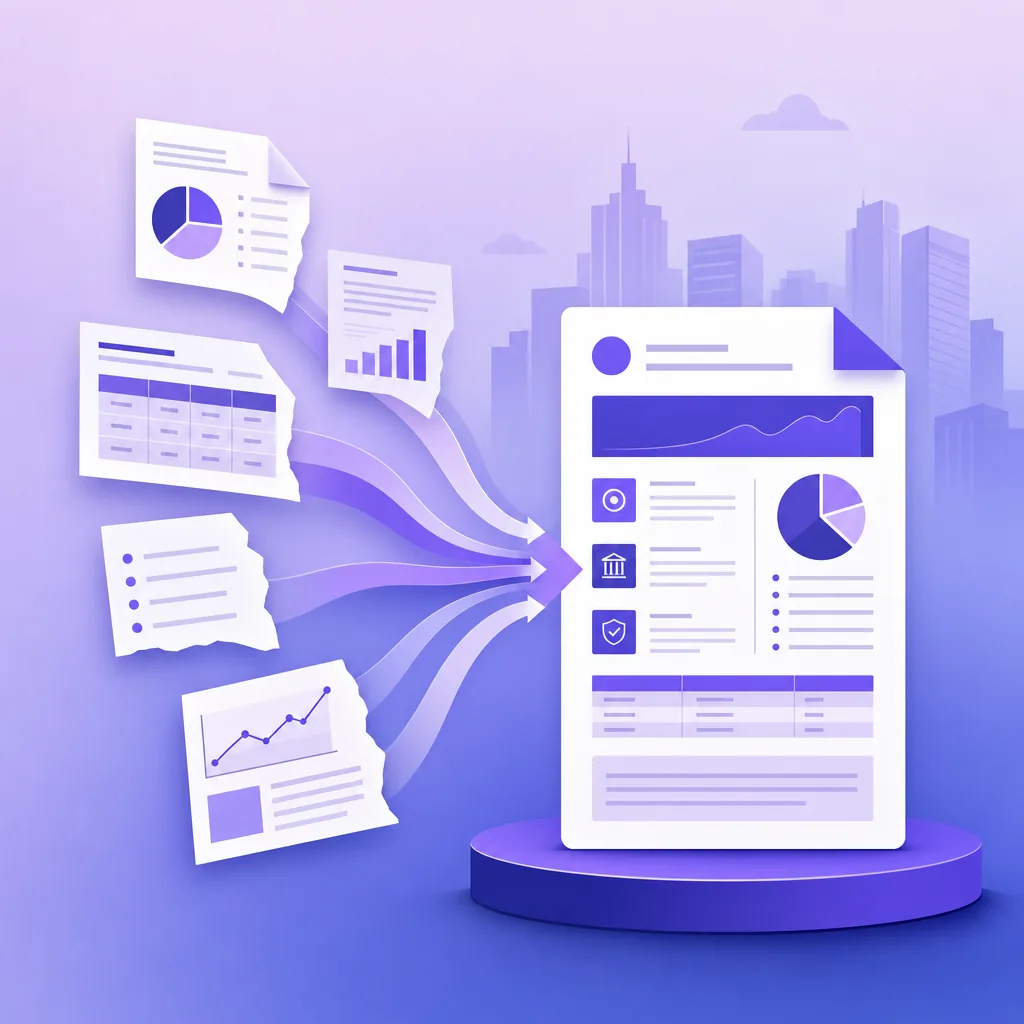
Credit proposals at the institutional scale are not a document - they're a coordination problem. Company narrative, sector intelligence, financial performance, peer comparison, ratings agency commentary, forward cashflow projections. Each section pulls from different teams, different data sources, different formats. The output is slow to assemble, inconsistent across analysts, and rate-limited by the most senior eyes that have to review every page. Meanwhile, the volume of proposals only goes up. The question: could agentic AI compress the production of a credit proposal without compressing the rigor - and free analysts for the work where their judgment actually matters?
- 01
Generate the company profile from the data, not the template.
We built an AI layer that produces company descriptions directly from structured and unstructured inputs - internal datasets, public filings, sector commentary. The output is editable, citable, and current. Analysts edit it; they no longer assemble it from scratch every cycle.
- 02
Automate the analysis where the math is explicit.
Industry intelligence, KPI extraction, year-on-year movement explanations, financial conclusions - each is a defined analytical task with defensible inputs and outputs. We wrapped each in an AI agent calibrated to the bank's internal frameworks. The judgment call: we kept the analyst in the loop on every page. The system writes the draft; the analyst writes the judgment.
- 03
Model the cashflow, don't just describe it.
Forward cashflow projections are the page where forecasting actually has to happen, not retelling. We integrated a dedicated statistical model that produces projections aligned with the rest of the AI-generated financial analysis - so the narrative and the numbers don't contradict each other.
Time-to-production for full credit proposals dropped dramatically. Narratives standardized across regions and analyst teams - the same client gets the same depth of analysis regardless of which desk picks it up. Risk insights deepened, because the AI surfaces patterns across the portfolio that any single analyst would miss. Most importantly: analyst capacity freed for the work that requires actual judgment - pricing, structuring, client conversations. The unlock: portfolio processing capacity scaled with the team rather than against it.
“In professional-services workflows, AI's job isn't to replace the analyst - it's to make every analyst feel like they have a senior associate. Build for assembly, leave the judgment where it belongs.
Sitting on a high-stakes document workflow where assembly time outweighs judgment time? We help capital-markets and risk teams move the assembly into AI, and keep the analysts on the page that matters.
Let's talk